
learn more
Orchestra Filarmonica della Calabria - Filippo Arlia - Giuseppe Andaloro
Rachmaninov
Concerto per pianoforte e orchestra n. 2 in do minore, Op. 18

One of Puccini’s early works, the Mass for four voices with orchestra, better known as Messa di Gloria, was composed between 1878 and 1880. Descended from a family of musicians for five generations, Puccini breathed in a musical tradition steeped in religious spirit that left little room for secularism from birth: Giacomo’s ancestors served as chapel masters and organists in Lucca Cathedral. It is therefore not surprising that the young composer, who would later turn his attention to opera, was at least touched by sacred music. In 1878, when he was just twenty years old, Puccini composed a Credo that was performed in the church of San Paolino. But Puccini’s musical genius, freed from the constraints of the family musical tradition, exploded two years later, in 1880, with the composition of a majestic Mass that powerfully announced the place he would occupy in the Olympus of musical gods. The sacred composition, performed in the same year, consists of the pieces of the Ordinarium Missae: Kyrie, Gloria, Credo, Sanctus and Benedictus, and Agnus Dei. Composed for his diploma exam, it was never published. We owe the posthumous publication of the work, which was given the subtitle Messa di Gloria, to an Italian-American priest, Don Dante Del Fiorentino. The year was 1952. The dramatic emphasis that would characterise his melodramas is already present in the musical temperament of the Mass. Kyrie: two contrasting themes, first stated by the strings and then taken up by the choir in the Kyrie eleison and Christe eleison, in a sound texture that weaves together the canon and the themes with overwhelming beauty.
Gloria: in a riot of colours, harmonic scales, chorales and fugues, Puccini reveals his mastery of counterpoint. Like a Baroque cathedral, a powerful fugue closes the section.
Credo: the Fortissimo opening is contrasted by a funeral Adagio, the Crocifixus, ending with a fugato in which the final Amen can be sensed. nctus and Benedictus: a gentle Sanctus, raising prayers to heaven, anticipates the Aria del Benedictus qui venit, followed by the powerful choral Hosanna. The orchestra closes the section sotto voce.
Agnus Dei: concise but effective, the last part of the Mass, in which the Maestro, rejecting any attribution of secularism or even atheism, surpasses the Pillars of Hercules, confirming a spiritual depth and, perhaps, a need for faith that he never confessed.
Listening to the Mass is made enjoyable by the masterful performance of the Calabria Philharmonic Orchestra, admirably conducted by Maestro Filippo Arlia who, with sensitivity and attention to semantics and aesthetics, conducts with enchanting skill, accompanying the listener into a soundscape that becomes an intense musical experience, in which the lyrical melodies and drama create an emotional language that heralds the works to come.

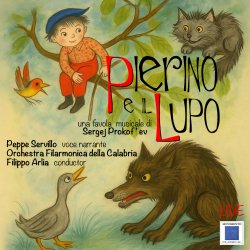
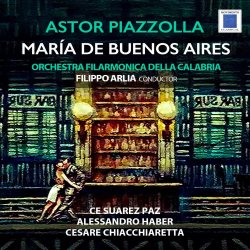
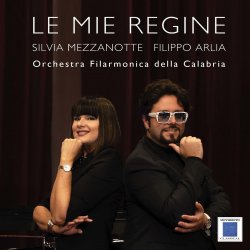
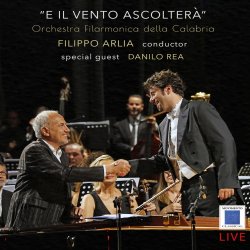
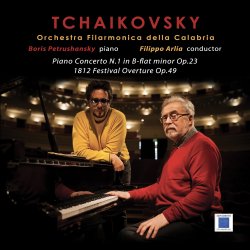
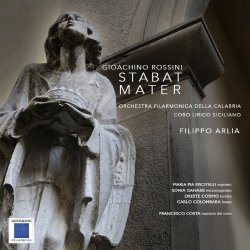
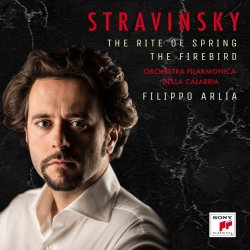
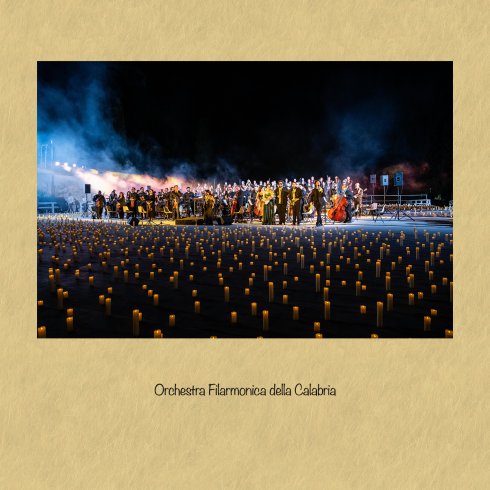
Orchestra Filarmonica della Calabria
It was born in 2011 as a resident orchestra of the Festival del Mediterraneo ; it has to its credit an intense concert activity that has seen it as the protagonist in several Italian theaters such as the Teatro Tendastrisce in Rome, the municipal theater of Altamura, the Politeama theater of Catanzaro. It has participated in numerous national festivals including the Festival delle Orchestre di Roma, the Festival "Leoncavallo" in Montalto Uffugo and the Festival Euro Mediterraneo in Altomonte. It is the resident orchestra of the opera season of the “Anfiteatro dei Ruderi di Cirella” since 2017. The orchestra was the protagonist of a tour in China at the Tianjin Opera House and the Harbin Opera House with the production of "Le Nozze di Figaro", "Pagliacci", "Cavalleria Rusticana", "Turandot", "Carmina Burana" and the New Year’s Concert with the voice of José Carreras. It boasts prestigious collaborations with many world-class musicians such as Michel Camilo, Ramin Bahrami, Sergej Krylov, Ilya Grubert, Sergei Nakariakov, Yuri Shiskin. The Principal Conductor is Filippo Arlia, awarded with the Gold Medal in the Aula Magna of the "La Sapienza" University of Rome "for the highly prized technique shown in the conducting of the orchestra and for the distinguished interpretation of the great symphonic repertoire of the '900".
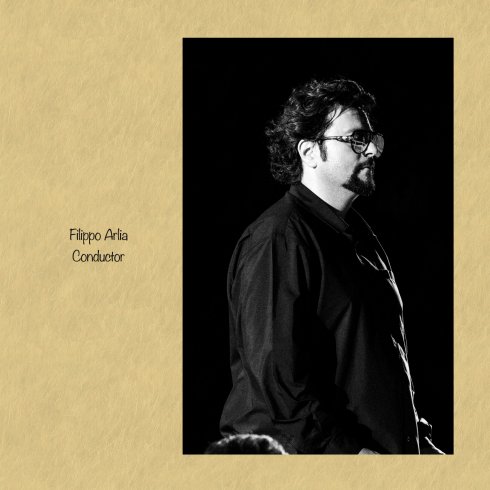
Filippo Arlia
Born in 1989, Filippo Arlia is a pianist and conductor. He is considered by the international critics one of the most brilliant and versatile Italian musicians of his generation and he is also defined volcanic and unstoppable, brilliant and extraordinarily convincing. He has conducted numerous concerts in Europe , the Middle East and in general in numerous world nations. He has conducted prestigious orchestras such as the Orchestra De Tineret of Cluj, the Cukurova State Symphony Orchestra of Adana, the Philharmonic Orchestra "M. Jora" of Bacau, the Pacific Symphony Orchestra of Vladivostok. Since 2014 he has been Director of the Istituto Superiore di Studi Musicali "P. I. Tchaikovsky" in Nocera Terinese (CZ), where he holds a chair in principal piano and the chair in conducting.