
learn more
Manila Santini - David Boldrini
Camille Saint-Saëns
Camille Saint-Saëns Works for Two Pianos

Camille Saint-Saëns was a prolific composer for two pianos and that repertoire is an expression of the principle of dialogue that we also find in his Piano Concertos and in his chamber music works. These works can be considered halfway between concert pieces and salon pieces, riding on a pronounced yet never forbidding virtuosity, brilliant and extremely pleasant to listen to. The catalogue comprises five pieces: the Variations on a Theme of Beethoven Op. 35, the Polonaise Op. 77, the Scherzo Op. 87, the Caprice arabe Op. 96, and the Caprice Op. 106.
The Variations on a Theme of Beethoven Op. 35, dated 1874, are dedicated "à Monsieur & Madame Alfred Jaëll.”. The couple Alfred Jaëll and Marie Trautmann had formed one of the first non-occasional piano duos and pursued an international concert career. Beethoven represented a unique point of reference for Saint-Saëns, and so an official tribute to the revered Master could not be absent, which is precisely what these variations represent. An undeniably monumental and virtuosic tribute, in which certain inventions foreshadowing impressionistic atmospheres alternate with more predictable and less personal moments, all within a writing of great solidity and remarkable timbral fullness. The Beethoven theme chosen by Saint-Saëns is that of the Trio of the Minuet from the Sonata Op. 31 No. 3; preceded by a brief introduction, it is followed by six variations, firmly anchored to the underlying structure and characterized by a constant dialogue between the two instruments, conceived in a spatial approach to sonority.
The Polonaise Op. 77, composed in 1886, is marked by lavish and celebratory tones, a fantastic tableau depicting the Polish nobility dancing in sumptuous costumes. The form of the piece is the traditional one, expanded by the insertion of a development section. In this composition, we also find a tribute by Saint-Saëns to the composer who more than any other embodies the spirit of the Polonaise: Frédéric Chopin. At the end of the introduction a detail from Chopin's Military Polonaise Op. 40 No. 1 is quoted, and at the close of the work, a sort of paraphrase of the trio from the "Heroic" Polonaise Op. 53.
The Scherzo Op. 87, written in Cádiz in 1889, is a piece of remarkable wit and humorous character, in which stylized imagination is cloaked in gaiety. The theme is based on the whole-tone scale; in the introduction, the tonality is not clearly defined but rather slightly distorted and caricatured, a shining example of the composer's irony and shrewdness.
The Caprice arabe Op. 96, dating from 1894, was written in Las Palmas and draws on a picturesque poetics and a rhapsodic formula analogous to those of the fantasy Africa and the Andante of the Fifth Piano Concerto, the composition of which it precedes by one year. As in those two works, one is confronted with a curious compromise between the depiction of authentic local Oriental color and European taste.
Finally, the Caprice héroïque Op. 106, dated 1898, dedicated to the memory of the Countess du Nord. The piece is divided into three sections: an Allegro in the manner of a gavotte, a Vivace in waltz time, and a concluding Allegro that ends in a kind of can-can. While the correspondence between the form and the “Caprice” of the title is easy enough to grasp, the reference to the "Heroic" is less clear, as it seems to have been replaced by a marked preference for the theme of dance.
This CD also contains recordings of the transcriptions for two pianos, written by Saint-Saëns himself, of two of his orchestral works. These are Le rouet d'Omphale Op. 31 and the Marche héroïque Op. 34.
Le rouet d'Omphale Op. 31 (Omphale's Spinning Wheel) is inspired by the story of Omphale, Queen of Lydia, and is the first French symphonic poem. For this first experiment in programmatic symphonic music, Saint-Saëns used a piece originally conceived for piano, born with the modest appearance of a Rondo for keyboard, later transcribed for two pianos and presented in its premiere performance by Saint-Saëns and Alexis de Castillon to the audience of the Société Nationale on December 7, 1871. The story from which the work draws its inspiration revolves around the power of feminine seduction and the struggle between triumphant weakness and strength: Jupiter sent Hercules to Omphale, Queen of Lydia, where the hero was to atone for the guilt of a murder by wearing women's clothing and submitting to the queen's seductive power. The countless arpeggios that pervade the piece depict the queen's hands as she weaves the delicate snares meant to hold Hercules captive, while in the central section of the piece one can hear the somber lament of Hercules, subjugated by Omphale's beguiling song.
The premiere of the Marche héroïque Op. 34 was also given in its two-pianos version, performed by Saint-Saëns himself and Albert Lavignac. The genesis of this work was, however, far more troubled. Between 1870 and 1871, while Paris was under siege by the Germans, Camille Saint-Saëns, then serving in the National Guard, composed Chant de guerre, a “cantata" deeply rooted in the context of the Franco-Prussian War. Chant de guerre was rejected by the committee of the Society of Opera Artists, then directed by Émile Perrin. The Marche héroïque, on the other hand, initially titled La Délivrance, enjoyed lasting success in concert societies after the war of 1870. Composed alongside the cantata Chant de guerre and borrowing its themes from it, Saint-Saëns produced the first draft of the Marche héroïque in its two-pianos version in 1870. The orchestral version of the work required another two years to complete; in the meantime, Saint-Saëns made several transcriptions of it: for solo piano, for military band, for piano four hands, and for two pianos eight hands.
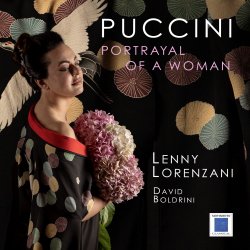
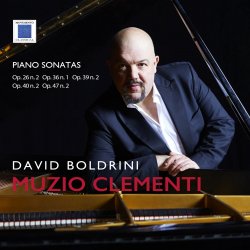
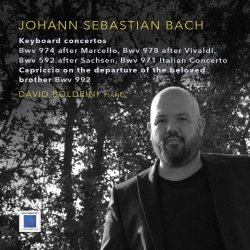
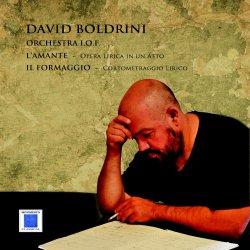
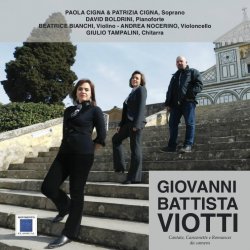
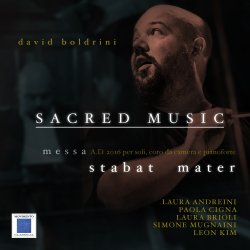
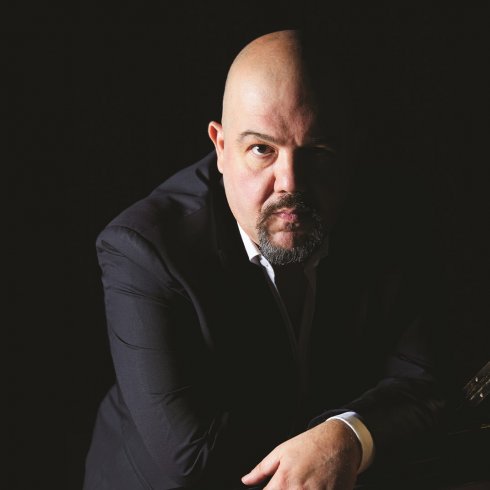
DAVID BOLDRINI
He graduated in piano at the Conservatory Cherubini in Florence in the class of Lidya Rocchetti with full marks, honors and honorable mention.
At the same time he graduated in organ and organ composition at the same conservatory studying in the class of M. Mochi .
He thus began to follow the master classes held by Bruno Canino at the Marziali Academy of Seveso and by the “Trio di Milano” at the music school of Fiesole. He also attended the two-year course held by the piano duo Moreno - Capelli , at the “la Musica Interna” in Bologna. He was an effective student of numerous master classes including those held by P. Badura Sckoda at Villa Medici in Milan, Bruno Canino at the “gli Amici della musica” in Florence and Fabio Bidini in Arezzo .
In 2001 he studied piano with Vincenzo Balzani at the Cantù music school, and then he attended the three-year course at the Imola piano academy " Incontri con il Maestro ", in the chamber music class of Pier Narciso Masi .
He also studied piano for four years at the Sesto Fiorentino music school with Pier Narciso Masi .
Winner of numerous competitions. In 2001 he was awarded the "LIONS" prize as the absolute winner of the “Città di Follonica” piano competition, in 2003 he was awarded as best chamber pianist at the “Luigi Nono competition” in Turin ( Venaria Reale ). In the same year he was first overall at the Rospigliosi competition and second overall at the International Valtidone competition in Piacenza .
In 2004 he was the absolute winner of the “Di Vicopisano” and “Nuovi Orizzonti” piano competitions in Arezzo.
Regularly invited as a soloist and as a chamber musician in prestigious associations, he performed for “L'associazione Fioravanti” of Prato, the “Lycaeum of Florence , the “i Concerti del Cicognini” of Prato, “Associazione musicale lucchese”, “Estate Frentana”, “Festival Barocco internazionale - Orchestra sinfonica” of Sanremo , “I concerti del museo casa Ivan Bruschi” of Arezzo, “Associazione giovani musicisti fiorentini Museo Chiesa di Dante Alighieri”, “Associazione Damaris” of Pistoia, “Teatro del lido” of Ostia, “Agimus Roma”, “Campus internazionale di musica” of Latina, Music Week in Brussels.
Chamber musician requested by internationally renowned artists, he collaborates alongside Maria Luigia Borsi, Andrea Bocelli, Paolo Chiavacci, Brad Repp, Augusto Vismara.
Since 2005 he has been the artistic director of the “Associazione Ramimusicali” of the homonymous concert season and of the competition which has reached its third edition this year.
